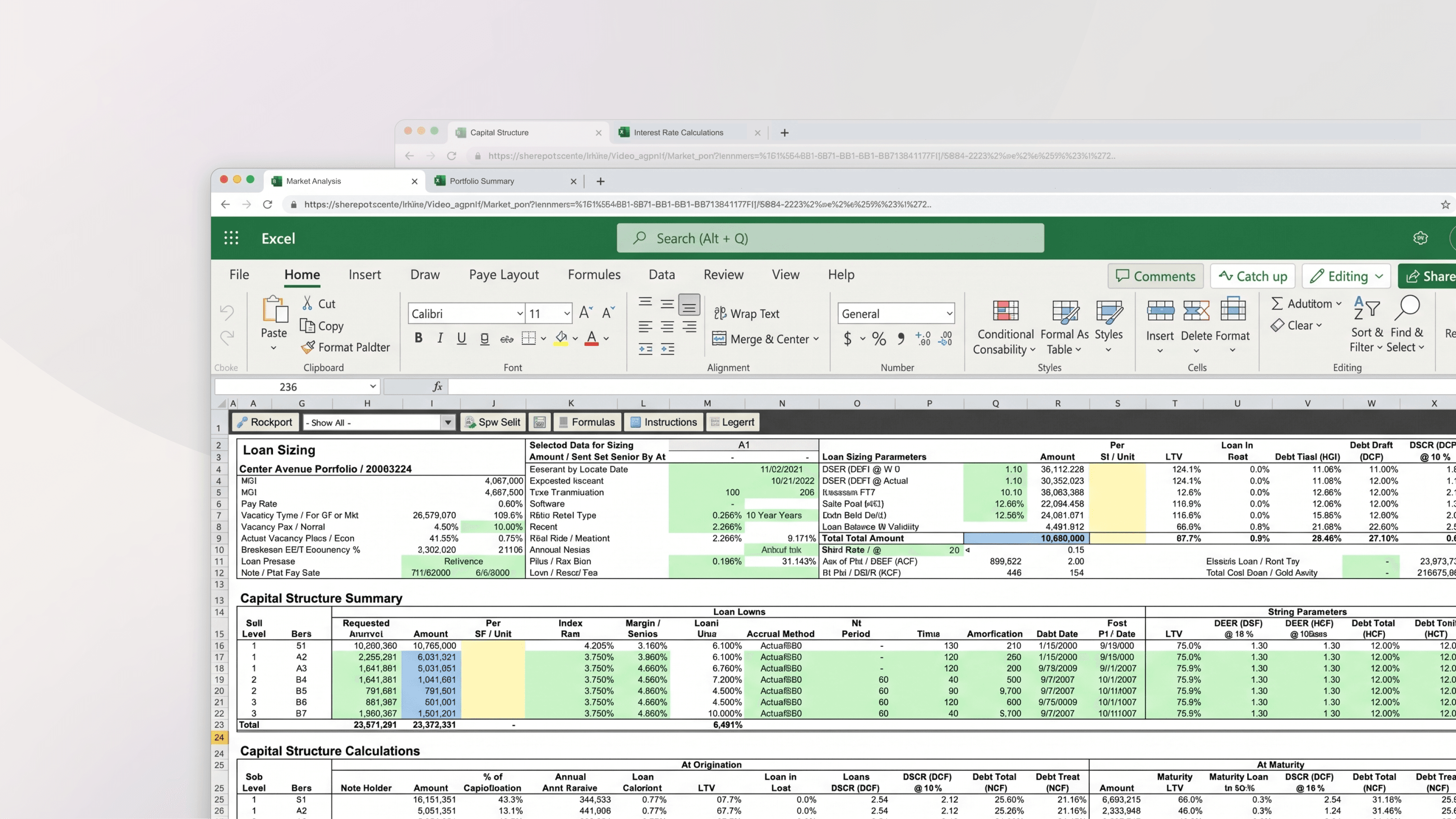

There's a moment in every private lender's life when they realize the thing slowing them down is their systems. More specifically, it's the collection of spreadsheets, the email threads, the shared drive folder, and maybe a loan servicing system from the 1980s that looks more like a spreadsheet than Excel itself.
For decades, this was just how things got done in real estate private lending. You hired good people. Those people built manual systems. The systems worked until they didn't, and then you hired more people to fill in the gaps. It was inefficient, expensive, and completely invisible to the outside world because everyone was doing it the same way.
Now comes the software vendor with a slide deck and a promise. We've got AI. And suddenly every lender in the country is trying to figure out whether they're about to buy the future or just a very expensive version of the past with a chatbot stapled to it.
Start With the Business Problem, Not the Technology
Before you evaluate any platform, you have to get honest about where your operation actually breaks down. Not where you think it breaks down. AI is a capability, not a solution. A platform's AI features are only valuable if they're pointed at real friction in your workflow.
That friction tends to cluster in predictable places. Origination is slow because intake is manual and reviewing bank statements still means someone opening a PDF and typing numbers into a model. Servicing is a grind because loan modifications fall through the cracks between systems. Investor reporting takes days it shouldn't because the data lives in four places and has to be reconciled before anyone can look at it. Compliance documentation is a trail of missing signatures and last-minute scrambles.
None of this is glamorous. None of it makes for a good conference panel. But it's where the money goes — in wasted hours, in hiring to cover the gaps, in the mistakes that happen when a process depends on a person remembering to do something.
Map your bottlenecks before you take a single demo. Then evaluate vendors against those specific problems. A platform that solves your top three issues reliably will outperform a "best in class" platform that solves problems you don't have.
Evaluate Core Platform Strength Before AI Features
AI features built on a weak core platform won’t solve your problems. And the vendors who lead with AI are sometimes, not always but sometimes, the ones who would prefer you not look too hard at what's underneath.
So before you spend any evaluation time on the intelligent features, pressure-test the boring ones.
Start with loan lifecycle coverage. Does the platform handle the full workflow from origination through payoff, or does it require third-party integrations to cover the gaps? Every integration point is a potential failure. It's a data consistency risk. It's a maintenance cost that doesn't show up in the license fee but shows up somewhere, eventually, usually at the worst possible moment.
Then push on the data model. Private credit is not a homogenous business. A bridge loan on a mixed-use property does not look like a DSCR loan on a single-family home, which does not look like a construction draw facility. A rigid data model that forces your deal structures into predefined fields breaks eventually, when the workarounds your team built to accommodate the gaps have quietly become load-bearing. Ask vendors how they handle custom loan types. Ask whether configuration requires an engineer or whether your team can manage it.
Reporting deserves more scrutiny. Investor reporting, portfolio monitoring, regulatory compliance — these should be native to the platform, not a semi-annual exercise in exporting to Excel and hoping the formulas hold. Ask how much manual intervention is required to produce a standard output. The answer is usually more than the demo suggests.
Evaluate workflow automation that has nothing to do with AI. This one gets overlooked because it's unglamorous. Triggers, task assignments, status transitions — the rule-based plumbing that moves work through your operation without anyone having to remember to move it. If this layer is weak, the AI features don't matter. You cannot build intelligent automation on top of a foundation that still requires someone to manually update a loan status.
Assessing AI Capabilities: Separating Substance from Marketing
Once you’ve confirmed the core platform is sound, you can start paying attention to the AI. And here the first thing to understand is that there is a meaningful difference between a platform that was built with AI in its architecture and a platform that had AI bolted onto it after the fact. The vendors will not always make this distinction easy to see. That’s part of the job.
There are roughly four categories of AI capability in lending software right now, and they are not equal.
Document Intelligence
The first is document intelligence, and it’s the only that has actually earned its reputation. The ability to take a disorganized PDF and extract structured data from it without a human spending hours on it is real and it works. When it works well, it can save a lot of human hours. The questions to ask are around the types of documents that are supported, the accuracy rate, and how confidence is scored. What happens when confidence is low? Is there a human review workflow or does the error just propagate into the loan record? Does extracted data write directly to the loan file, or does someone still have to confirm it manually?
The last question matters more than it sounds. A system that extracts data but still requires manual confirmation has automated the reading and preserved the bottleneck.
As for a live demo with your own documents. Not the vendor’s sample files, which were selected because they’re clean and well-formatted.
Underwriting Assistance
The second category is underwriting assistance, and this is where the range between what vendors claim and what they’re actually selling gets widest. Populating a credit memo template with data that was already extracted is useful but it’s not AI-assisted underwriting in any meaningful sense. A predictive risk score, on the other hand, is a different product entirely, and it comes with a different set of questions. What variables drive the model? What dataset was it trained on, and does that dataset look anything like your portfolio? Can the outputs be audited? Can you explain the score to a credit committee?
Explainability is both a regulatory concern and also a practical one. Underwriters who don’t understand why a model produced a given output, and disagree with it, will often override it. And when they do, you will have paid a meaningful sum of money for a feature that nobody uses.
Workflow and Decisioning Automation
The third category is workflow and decisioning automation. Examples of this include creating and routing underwriting conditions, flagging covenant breaches, or alerting you to loans that are at-risk. This is genuinely valuable when it works because the cognitive load of remembering requires a lot of human time and effort. The key question is configurability. Your credit guidelines are not the same as another lender’s. A system that lets you define the logic driving these automations is a different product than one where the logic is fixed and opaque.
Generative AI Features
The fourth category is generative AI. Drafting loan summaries, generating letters, answering natural language questions about a loan file, are all examples of this. This is genuinely useful. But it comes with a specific risk, which is hallucination. A system that generates fluent, confident text that is factually wrong about a borrower’s profile is a liability, not a productivity tool. Ask vendors if the output is grounded in your loan data or is the model generating text from general training. What guardrails exist? Does private data get anonymized when it’s processed by the model?
Integration and Data Portability
No platform operates in isolation, and the vendors who present their software as if it does are being optimistic at best.
The question to ask is what the platform actually connects to and what happens at the seams?
Every lending operation runs on more than one system. The loan origination system, the servicing platform, the CRM, the accounting system. Each connection is a potential failure. Some failures are loud. Some are quiet, the data drifting out of sync until nobody’s numbers match and it’s the end of a reporting period.
When you evaluate integrations, get specific. Not “do you integrate with our CRM” but “what does the data exchange look like, is it real-time or batch, and who is responsible when there are discrepancies”?
Ask the same questions about the other systems. Then ask about data portability. If you migrate off this platform in three years, how do you get your loan history out? Your documents? Your audit trails? Proprietary formats that make extraction difficult are not a technical limitation. They are a business decision. A vendor with a good product doesn’t need to make it hard to leave.
Implementation and Ongoing Support
The demo is the best the product will ever look. That’s just how software works. The demo is prepared, the data is clean, and the person running it has done it several hundred times.
The gap between a successful demo and a successful implementation is where most software decisions go wrong. Strong technology with weak implementation support produces bad outcomes. Ask how the onboarding process actually works and speak with someone who will actually help with your onboarding. Is there a structured methodology with defined milestones, or is it largely self-directed with a shared drive full of documentation and a call every two weeks? What does the typical timeline look like for an operation your size?
If you’re migrating off an existing system, ask specifically about data migration. Not whether it’s possible. How it works, what tooling exists, and who has done it from the system you’re currently on. Migrations that go badly tend to go badly in ways that take months to fully surface.
Ask about training and ongoing support with the same specificity. When something breaks in your servicing workflow on a Friday afternoon, what does escalation look like? Who picks up? These are not hypothetical questions. These are things that will happen.
Then ask for references. Not the references the vendor offers, which were selected because they’re happy. Ask for lenders of similar size and loan type and find them yourself if you have to. A platform that works well for a high-volume consumer lender may be entirely wrong for a private lending fund.
Pricing and Total Cost of Ownership
The headline number is not the number that matters.
Lending software pricing is designed to be hard to compare. Per-seat, per-loan, AUM-based, or some combination engineered to require a spreadsheet to untangle. What matters is what the platform actually costs to buy, implement, integrate, and operate over three to five years. Implementation fees, data migration, integration development, the internal resources required to keep it running — none of this shows up in the license fee, and all of it shows up somewhere.
Also ask how pricing scales. Transaction-based models that look reasonable at current volume can become punishing in a growth scenario. The vendor will not volunteer this. You have to ask.
A Framework for Final Evaluation
When you've narrowed to two or three finalists, structure your final evaluation around these dimensions:
- Core functionality fit: Does the platform cover your full loan lifecycle with the data model flexibility your portfolio requires?
- AI capability maturity: Are AI features production-grade and relevant to your specific workflows, or are they nascent and oversold
- Integration depth: Can it connect cleanly to the systems you already rely on?
- Implementation track record: Does the vendor have documented success with lenders like you?
- Support quality: Will you get responsive, knowledgeable support post-go-live?
- Total cost over three to five years: Including all implementation, integration, and operational costs.
- Vendor trajectory: Is the company investing in the product, financially stable, and aligned with where private credit is going?
No finalist will be perfect on all seven. The goal is to know which ones matter most to your operation.
The Bottom Line
AI is becoming a meaningful differentiator in lending software but primarily for platforms where the core product is already strong. The right question isn't "which platform has the most AI features?" It's "which platform solves my operational problems reliably, has a credible roadmap, and happens to have AI capabilities that will compound in value as the technology matures?"
Evaluate with discipline. The switching costs in lending software are high. Getting the selection right the first time is worth the diligence.